Almonds: Tiny Nuts with Huge Benefits
Ever wonder how something so small can be so powerful? Almonds may be tiny, but they pack a big punch when it comes to your overall wellness. Whether you’re looking for a healthy snack, a boost of energy, or a simple way to support your daily routine, almonds are a smart choice.
If you’re just starting your wellness journey, adding a handful of almonds to your day is a simple step with long-term benefits.
Why Almonds Are a Super Snack
Almonds are more than just tasty — they’re full of nutrients that support a healthy lifestyle. These little nuts are loaded with fiber, healthy fats, vitamins, and minerals.
Here’s why almonds make a smart snack:
- Rich in good fats: Almonds contain monounsaturated fats that support heart health.
- Source of plant-based protein: Great for vegetarians and active individuals.
- Loaded with vitamin E: A natural antioxidant that supports skin and cell health.
- High in fiber: Helps with digestion and keeps you full longer.
What makes them even better is that they’re easy to carry, require no prep, and taste great.
Easy Ways to Add Almonds to Your Day
If you’re not used to eating nuts regularly, don’t worry — it’s easy to get started. Almonds can be added to your meals or enjoyed on their own.
Here are a few beginner-friendly ways to enjoy almonds:
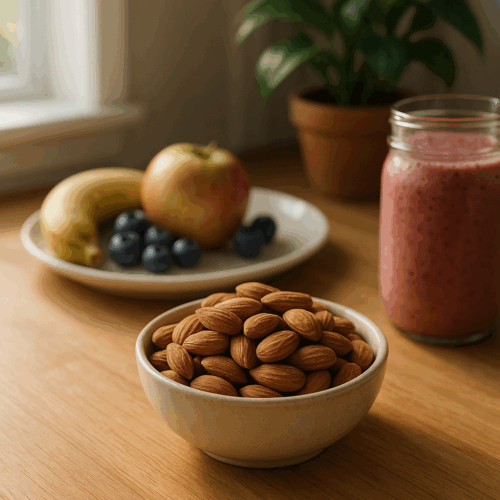
- Grab a small handful (8–10 almonds) as a mid-morning or afternoon snack.
- Add chopped almonds to your oatmeal or yogurt.
- Sprinkle over salads for a nutty crunch.
- Use unsweetened almond butter on toast or apple slices.
- Add crushed almonds to smoothies for extra texture and energy.
Start with small amounts if you’re new to nuts, and always choose unsalted, raw or dry-roasted varieties for the healthiest option.
Store Them Right: Keep Almonds Fresh
Almonds can last a long time if stored properly — and that’s great for planning healthy snacks ahead of time.
Here are some tips to keep them fresh:
- Store in an airtight container to prevent them from getting soft or stale.
- Keep in a cool, dry place like a pantry.
- For longer shelf life, store in the refrigerator or freezer (especially in warm climates).
Buy almonds in bulk to save money, and portion them into small containers or zip bags for easy grab-and-go snacks.
A Little Goes a Long Way
It’s easy to get carried away with nuts, but moderation is key. Almonds are energy-dense, meaning they’re small but calorie-rich — which makes them ideal for people who want a quick, nutritious bite.
A good daily portion for most people is:
- 8 to 12 almonds per day — about one small handful
This amount is satisfying without going overboard and gives you all the key benefits without excess.
My Personal Almond Habit
I wasn’t always into healthy snacking — I used to grab chips or cookies during work breaks. But ever since I started keeping a small jar of almonds on my desk, I’ve noticed a big change. I feel fuller, more focused, and less likely to reach for junk food. It’s a small switch that made a big difference in how I feel during the day.
Final Thoughts: Small Change, Big Impact
Almonds are one of the simplest wellness upgrades you can make. They don’t need cooking, they’re easy to carry, and just a handful a day supports a healthier lifestyle. If you’re new to wellness habits, this is a smart and easy first step.
So, next time you’re packing lunch or heading to work, toss a few almonds in your bag. Your body — and your energy — will thank you.
About the Author
Hi! I’m Bhupen Kumar, a health & wellness blogger passionate about simple lifestyle habits that make a big difference. I write beginner-friendly tips to help you feel better every day—naturally and joyfully.
Follow me on Instagram for more daily wellness bites!
Frequently Asked Questions (FAQs)
1. How many almonds should I eat per day?
A small handful (about 8 to 12 almonds) is a healthy portion for most people. It’s enough to enjoy the benefits without overdoing it.
2. Is it better to eat almonds raw or roasted?
Both are good, but unsalted raw or dry-roasted almonds are the healthiest options. Avoid heavily salted or oil-roasted versions for better wellness benefits.
3. Can I eat almonds on an empty stomach?
Yes, almonds make a great light snack in the morning or between meals. They provide energy and help keep you full.
4. Are almonds good for weight management?
Yes, when eaten in moderation, almonds can help you feel full longer, which may reduce unnecessary snacking. Just watch your portion size.
5. Do I need to soak almonds before eating them?
Soaking is optional. Some people soak almonds overnight to soften them and make them easier to digest, but dry almonds are perfectly fine to eat as they are.
External Resources & References
Here are some reliable, beginner-friendly links to learn more about almonds and healthy eating:
- California Almonds Official Site – Nutritional facts, recipes, and tips from the Almond Board of California
- Harvard T.H. Chan School of Public Health – Almonds – Scientific overview of almonds and their health benefits
- Healthline: 9 Evidence-Based Health Benefits of Almonds – A breakdown of benefits supported by studies
- www.almonds.com – Almond Nutrition Benefits – Beginner-friendly information from a trusted source
- Eat Right: Academy of Nutrition and Dietetics – Professional guidance on healthy eating and smart snacking